Kentucky · Mixed Four-Season climate zone
Home maintenance in Kentucky
Kentucky sits in the mixed-humid climate zone, and that one classification explains most of what your house needs.
Hot, wet summers meet real winters here, which puts Kentucky homes in the worst of both worlds: enough cold to matter, and enough summer humidity to rot wood. A lot of Kentucky housing sits on a vented crawlspace, and in this climate those vents work backward from how they were designed. They were meant to dry the space out. From June through September they do the opposite.
The ground under the house matters too. About 55% of Kentucky is underlain by rock that can form karst, and roughly a quarter of the state has well-developed karst features — sinkholes, caves, springs, and streams that disappear underground and come back somewhere else. Ninety-two of Kentucky's 120 counties contain karst, and Louisville, Lexington, Bowling Green, Frankfort, Elizabethtown, and Georgetown are all partly or entirely built on it.
And Kentucky sits in the "heavy" band on the national termite infestation probability map, in a climate where the wood under your floor stays damp. Those two facts belong to the same paragraph.
Your Kentucky schedule is built around moisture, wood, and what's underneath.
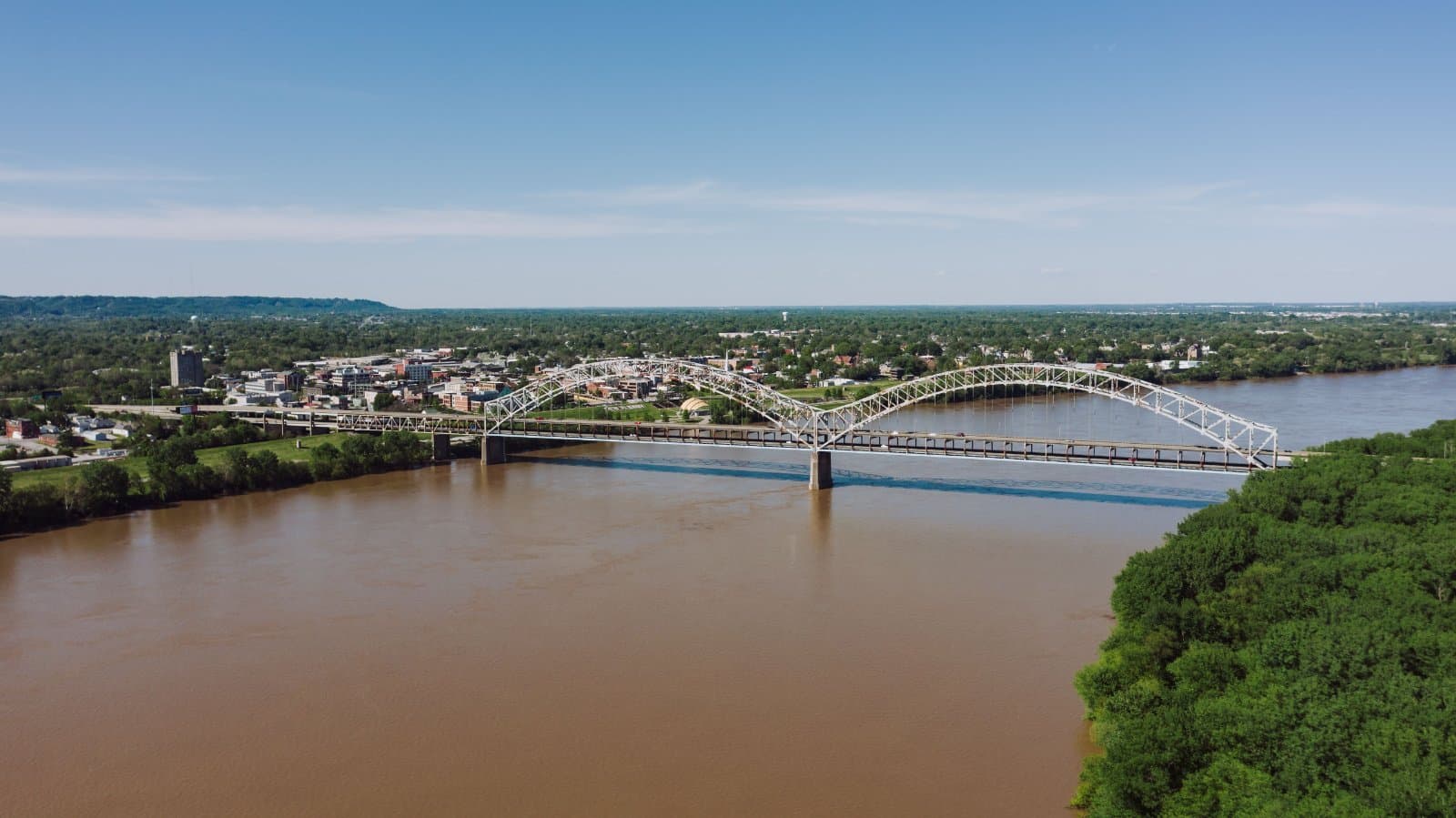
The calendar
Freeze timing in Kentucky
Kentucky's growing season is long and getting longer. NWS Louisville publishes station-level frost and freeze information for Kentucky, and the picture from the 1991–2020 normals is that several locations across the Commonwealth now see their average first freeze in late October or early November — later than the previous two normals periods.
The range at Lexington shows how much year-to-year variation is normal: the earliest first fall freeze on record is September 30, the latest is November 27, and growing seasons have run from 159 days to 242.
The state runs a real west-to-east gradient. Paducah and the Jackson Purchase in the far west stay milder and later than the eastern mountains, where elevation shortens the season considerably.
What that means for the house:
Late spring, once outdoor humidity climbs — The crawlspace decision point. See note 1. This is the single most consequential seasonal call a Kentucky homeowner makes. June through September — Watch crawlspace and basement humidity. This is peak condensation season, not peak dryness. September — Furnace service, and the annual termite walk-around while the ground is still workable and mud tubes are visible. See note 2. Mid-to-late October — Hoses disconnected and drained, interior shutoff valves closed. In a crawlspace house the exposed plumbing under the floor freezes long before anything buried does, so this is more urgent here than the mild freeze dates suggest. Before the first hard freeze — Insulate exposed crawlspace pipes and seal foundation gaps where cold air pours in. After leaf drop — Gutters and downspout extensions. In karst country, where that water goes matters more than usual. See note 3. Early spring — Crawlspace inspection after the wet season: standing water, sagging insulation, musty smell, wood that gives when you press it.
See your Kentucky schedule
Most maintenance checklists are written for a house with a basement. If yours sits on a crawlspace in a humid climate, the schedule that matters looks different — and it starts with when your vents should be open. The free schedule builder uses your zip code, your home's age, and its type. No login, no account. Two minutes, and you get a seasonal schedule plus a one-page checklist you can print and keep.
Free · no login · about 90 seconds
What's different about Kentucky
Your crawlspace vents are working backward
Foundation vents were required in Kentucky homes for decades on the theory that outside air would carry moisture out of the crawlspace. In a dry climate that works. In Kentucky's mixed-humid climate it inverts, and the U.S. Department of Energy's own research says so: vented crawlspaces in mixed and hot-humid climates tend to raise moisture levels rather than lower them.
The physics, because it's worth understanding once. Ground-coupled crawlspace surfaces stay around 60 to 68°F year-round. On a July afternoon, outside air might be 90°F at 75% relative humidity. That air enters through the vents, hits joists and ductwork that are twenty-five degrees cooler, and the moisture it was carrying condenses out onto the wood. The vent designed to dry the space is delivering water to it, gallon by gallon, all summer.
What that produces: mold, wood rot in the joists and subfloor, buckling or cupping floors above, insulation that absorbs water and falls down, musty smells upstairs, and a standing invitation to termites, which need moisture to survive.
The seasonal rule of thumb, if your crawlspace is still vented: vents open in the cold, dry months, closed during humid summer months. It's a compromise, and it depends on you remembering twice a year.
The durable answer is a sealed crawlspace. Vents closed and sealed, a heavy vapor barrier across the floor and up the walls, air sealing at the rim joist, and a dehumidifier holding relative humidity below about 50 to 55%, which is the threshold where mold stops activating. Building Science Corporation, DOE's Building America program, and current code all point the same direction for this climate zone.
On a schedule, whichever setup you have:
Twice a year, spring and fall: go under the house, or at minimum open the access and look with a flashlight. Standing water, condensation on ductwork, drooping insulation, a musty smell, or wood that feels soft are all early warnings. A $15 hygrometer left in the crawlspace turns this from guesswork into a number. Above 60% relative humidity for weeks at a time means you have a problem developing. Every year: confirm gutters and downspout extensions are moving roof water at least several feet from the foundation, and that grade slopes away from the house. Most crawlspace water problems start above ground.
Termites, and why Kentucky homes are a target
Kentucky sits in the "heavy" termite infestation probability band on the map the residential code uses, and the state's own extension service publishes homeowner guidance on it. The reason Kentucky is worse than states a few hundred miles north is the same reason note 1 exists: subterranean termites need moisture, and a damp crawlspace is exactly the habitat they're looking for.
The damage is slow and hidden. It happens in crawlspaces, behind walls, and under floors, and by the time you see bubbling paint, sagging floors, or wood that sounds hollow, the colony has usually been working for years.
What to look for, and when. Walk your foundation once a year, ideally in spring:
Mud tubes. Pencil-width tunnels of dirt running up foundation walls, piers, or joists. Subterranean termites build them to stay moist while they travel. This is the most reliable visible sign. Swarmers. Winged termites appear in spring, typically on warm days after rain. Discarded wings on windowsills near the foundation are a strong signal. Wood that gives. Probe suspicious joists and sills with a screwdriver. Sound wood resists; damaged wood gives.
Termites versus flying ants, since the spring swarm causes most false alarms: termites have straight antennae, a thick waist with no pinch, and two pairs of wings the same length. Ants have elbowed antennae, a narrow pinched waist, and front wings noticeably longer than the back.
On a schedule:
Annual professional inspection. This is standard practice in Kentucky and it's why a termite inspection is a routine condition of sale here. Damage is generally excluded from homeowners insurance, so the inspection is the protection. Every year, remove the food and the water. Firewood stacked against the house, cellulose debris and scrap lumber under the crawlspace, mulch piled against the foundation, and shrubs blocking airflow all help termites. Under Kentucky regulation, loose cellulose debris beneath a structure is supposed to be removed as part of treatment. Keep at least six inches of clearance between wood siding or trim and the soil. Fix the leaks. A dripping hose bib, a leaking crawlspace pipe, or a downspout dumping at the foundation are all termite infrastructure. Know what over-the-counter products can't do. A colony lives underground in the thousands. Retail sprays kill what you can see and leave the colony intact.
Living on karst
About 55% of Kentucky is underlain by rock capable of forming karst, roughly 38% shows karst development visible on topographic maps, and about 25% of the state has well-developed karst features. Ninety-two of the 120 counties have some. Mammoth Cave is the longest known cave system on earth, and the same geology runs under Lexington's horse farms and a long list of Kentucky towns.
Kentucky Geological Survey's guidance is blunt about what that means for a homeowner: in a humid climate like Kentucky's, assume all limestone has karst development, even where nothing is visible at the surface.
The practical consequence is that karst has almost no natural filter. Elsewhere, rain percolates slowly through soil and rock, and that journey cleans it. Here, surface water can drop into a sinkhole or fracture and reach the aquifer in hours, carrying whatever it picked up. Springs and wells in Kentucky's karst areas supply water to thousands of homes, and groundwater moves fast through those underground conduits.
On a schedule, if you're on karst:
Never route anything into a sinkhole. Not downspouts, not sump discharge, not yard waste, not a French drain. It isn't a drain. It's an open pipe to the water table, and quite possibly to a neighbor's well. If you're on a private well, test after heavy rain, not just annually. Cloudy or muddy water following a storm means surface water is reaching your well, and bacteria travel the same path. Watch for new depressions after wet seasons, especially near the house, driveway, or septic field. A shallow dish in the lawn that keeps deepening is worth a call before it's worth a claim. Sinkholes are the largest and most frequently encountered karst hazard in Kentucky. Before any septic work, check your county health department's rules. Siting requirements in karst are stricter for good reason. Manage roof and surface water deliberately. Concentrated water discharged in one spot is one of the ways a dormant sinkhole becomes an active one.
The Kentucky maintenance year
A sample from the reviewed task library for this climate zone — your full schedule comes from the generator above.
Fall
Disconnect and drain garden hoses · Yearly · 10 minutes
A connected hose traps water in the spigot pipe, and a hard freeze can crack that pipe inside the wall. Disconnect and drain hoses before the first hard freeze.
Timing in this zone: mid-October
Shut off and drain exterior spigots · Yearly · 15 minutes
Closing the interior shutoff and draining the line removes the freeze risk entirely. It's recommended even if you have frost-free spigots.
Timing in this zone: Late October/November
Winterize the irrigation system · Yearly · 30 minutes to book a blowout, or DIY with a compressor
Water left in buried lines freezes and splits fittings you can't see until spring. Schedule a blowout, or DIY with a compressor, before the first hard freeze.
Timing in this zone: mid-October
All year
Change the furnace filter · Every 3 months · 10 minutes
A clogged filter forces the furnace to work harder and wear out sooner. Check it monthly and replace it when it looks gray and dusty. Hint: buy multiple filters so you have them on hand next month!
Test smoke detectors · Every 6 months · 5 minutes
Smoke detectors only work if the batteries do. It's recommended to test every detector twice a year and replace batteries as needed.
Test carbon monoxide detectors · Every 6 months · 5 minutes
Carbon monoxide is invisible and odorless, so the detector is your only warning. Test it twice a year, especially before heating season.
Winter
Watch for ice dams at the roof edge · After heavy snow + thaw cycles · 5 minutes from the driveway
A thick ridge of ice at the gutter line means snowmelt is backing up under the shingles. After heavy snow, a glance from the driveway tells you if one is forming.
Timing in this zone: after big storms
Let faucets drip during deep freezes · During deep-freeze events · 2 minutes
Moving water is much harder to freeze. On subzero nights, a thin stream from faucets on outside walls is cheap insurance against burst pipes.
Timing in this zone: rare single-digit snaps
Check that the sump discharge line isn't frozen · Monthly in winter, and during thaws · 5 minutes
If the discharge line freezes, the pump pushes against a plug of ice until it burns out or the pit overflows. Check the outlet during cold snaps and thaws.
Spring
Test the sump pump · Yearly (plus after long idle spells) · 15 minutes
Spring melt and heavy rain tend to arrive together, and the pump needs to be ready. Pour a bucket of water into the pit and confirm it kicks on and drains. While you're there, take a look in the pic and remove any debris.
Check sump pump backup battery · Yearly · 10 minutes
The storms that flood basements often knock out power too. Check the backup battery's charge and age each spring.
Timing in this zone: Do this in the late winter, early spring before heavy rains
Clean gutters and downspouts (spring pass) · Twice a year · 1–2 hours
Winter leaves gutters full of grit and seed pods. Clogged gutters send water toward the foundation, so it's worth clearing them each spring. This will help heavy spring rain water drain properly.
Summer
Inspect and reseal the deck · Yearly check; reseal every 2–3 years · 20 minutes to check; a weekend to seal
Sprinkle water on the boards; it should bead up on sealed wood. If it soaks in, the deck is absorbing rain and it's time to reseal. Check your forecast and plan to work on this during a week with no rain.
Wash siding · Yearly · 2 hours
A yearly rinse removes the mildew film before it becomes a scrubbing job. It's also your best chance to spot loose or damaged siding up close.
Trim vegetation back from the house · Yearly · 1 hour
Branches that touch the house give insects a bridge and hold moisture against the siding. Aim for at least a foot of clearance all the way around. Note: Many insurers will require this to issue or renew your homeowners insurance.
Real houses, real people
What homeowners say
“We just purchased our first home and know very little about everything that goes into maintaining a home. We love being able to see the seasonal and local advice that helps us protect our investment.”
 Sean and LindsayAllentown, Pennsylvania
“With three kids and two working parents, time for home maintenance can be hard to find. Lillypad's Fix It Friday emails highlight the key tasks that only take a few minutes but make a huge impact. We use the add-to-calendar feature and carve out 30 minutes each weekend to tackle a few small things as a family. The kids love learning about taking care of our home!”
 KyleSaginaw, Michigan
“Even though we're just renting this house, Lillypad helps us stay on top of the must-do tasks so that we can avoid having to call the landlord for the big stuff. The tasks are relatively simple to do, and the advice we get from Lillypad is helpful, educational, and affirming.”
 MikeWashington, DC
Testimonial 1 of 3
Kentucky home maintenance questions
Should crawl space vents be open or closed in Kentucky?
Kentucky is in the mixed-humid climate zone, where DOE research shows vented crawlspaces increase moisture rather than reduce it. Warm, humid summer air enters the vents and condenses on crawlspace surfaces that sit twenty-plus degrees cooler, which drives mold and wood rot. If your crawlspace is still vented, the seasonal rule is open in cold dry months and closed during humid summer months; the durable fix is a sealed and encapsulated crawlspace with a vapor barrier and a dehumidifier holding humidity below 50 to 55%.
How often should I get a termite inspection in Kentucky?
Annually. Kentucky sits in the "heavy" band on the termite infestation probability map used by the residential code, and damp crawlspaces make the state's housing an easy target. Watch for pencil-width mud tubes on foundation walls and piers, discarded wings near windows after spring rains, and wood that gives when probed with a screwdriver. Termite damage is generally excluded from homeowners insurance, so the inspection is the protection.
What should I know about sinkholes on my Kentucky property?
Never route downspouts, sump discharge, yard waste, or drainage into one — a sinkhole is a direct opening to the groundwater with almost no natural filtration. About 25% of Kentucky has well-developed karst features and 92 of the state's 120 counties contain some, so Kentucky Geological Survey advises assuming limestone areas have karst development even where nothing shows at the surface. Watch for new or deepening depressions after wet seasons, especially near the house, driveway, or septic field.
When is the first freeze in Kentucky?
Later than most of the Midwest, and getting later. Under the 1991–2020 normals, several Kentucky locations now average their first freeze in late October or early November. Year-to-year variation is wide — Lexington's earliest first fall freeze on record is September 30 and the latest is November 27. Disconnect hoses by mid-to-late October, since exposed plumbing in a crawlspace freezes well before buried lines do.
When should you check sump pump backup battery in Kentucky?
Do this in the late winter, early spring before heavy rains. The storms that flood basements often knock out power too. Check the backup battery's charge and age each spring.
When should you reconnect hoses and open exterior spigots in Kentucky?
late April. Opening the outdoor water season deliberately helps you catch winter damage early. Watch each spigot as you reconnect; a cracked pipe often shows up as a leak indoors.
When should you disconnect and drain garden hoses in Kentucky?
mid-October. A connected hose traps water in the spigot pipe, and a hard freeze can crack that pipe inside the wall. Disconnect and drain hoses before the first hard freeze.
Keep the whole house on schedule
Lillypad builds your schedule free, no login. The paid plan adds Fix It Friday — one weekly email with what's worth doing this weekend. See pricing, or how we compare to other home maintenance apps.