Pennsylvania · Mixed Four-Season climate zone
Home maintenance in Pennsylvania
Pennsylvania is three housing markets wearing one state's name, which is exactly why a single national checklist misses here. Philadelphia and the southeast run mild and humid, close to mid-Atlantic weather, full of brick rowhomes sharing party walls. Pittsburgh and the west sit in hill country, cloudy through winter, with a lot of houses built into a slope and draining toward a neighbor. The northern tier and the Alleghenies are genuinely cold, with the shortest seasons in the state — and Erie is its own case, where the lake keeps the shoreline milder than the mountains two hours south.
What ties all three together is age. Pennsylvania has the fourth-oldest housing stock in the country, with about a quarter of occupied units built before 1940 and a statewide median construction year of 1964. That means original wiring surviving in attics, oil heat still running through much of the northeast, and chimneys that have outlived several furnaces.
Your Pennsylvania schedule accounts for both the regional spread and the age of the stock. If your house is newer, you'll skip a few items, and that's a good problem to have.

The calendar
Freeze timing in Pennsylvania
Pennsylvania's spread is wide enough that a statewide date would be wrong for most people. Find your part of the state.
Southwest and west (Pittsburgh, Allegheny County): NWS 1991–2020 normals put Pittsburgh's average first freeze at October 20 and its average last spring freeze at April 25. Higher elevations east and south of the city run earlier in fall and later in spring.
Erie and the lakeshore: the lake pushes the first freeze later than anywhere else in this group — Erie's average is November 1, with an average last spring freeze of April 25. The shoreline is milder than the mountains two hours inland, which surprises people who assume "lake effect" means "colder."
Northern tier, Poconos, and the Alleghenies: the earliest first freezes and the latest last freezes in the state, running weeks ahead of Pittsburgh in fall. Mount Pocono has recorded September first freezes repeatedly across the record. Treat every date below as two to three weeks earlier at elevation.
Southeast (Philadelphia, Delaware Valley, Lancaster): the mildest part of the state and the last to freeze.
What that means for the house:
September — Furnace or boiler service. If you heat with oil, this is also the closing of your summer-rate fill window. Early October in the mountains, later in the southeast — Hoses disconnected, outdoor spigots shut off at the interior valve. Before the first freeze — Exterior caulk and any masonry repointing wrapped up. Most sealants and mortar need temperatures above 50°F to cure properly. After leaf drop, generally early-to-mid November — Gutters. Later in the southeast than the north. March — Walk the brick and mortar. Western Pennsylvania in particular rides the freezing line all winter rather than settling below it, and every one of those cycles pushes water a little deeper into a mortar joint.
See your Pennsylvania schedule
Pittsburgh, Erie, and the Poconos don't share a calendar, and a statewide checklist would be wrong for two of the three. The free schedule builder uses your zip code, your home's age, and its type — no login, no account. Two minutes, and you get a seasonal schedule plus a one-page checklist you can print and stick on the garage wall.
Free · no login · about 90 seconds
What's different about Pennsylvania
Radon, and how often to retest
Pennsylvania is where the country found out about radon. In December 1984, weeks before the Limerick nuclear plant was scheduled to begin operating, construction engineer Stanley Watras set off a newly installed radiation detector on his way into work — not on his way out. Investigators traced it to his own family home in Colebrookdale Township, near Boyertown, which turned out to hold the highest residential radioactivity ever documented in an American home. The source was the Reading Prong, a uranium-bearing granite and gneiss formation running under Berks, Lehigh, Northampton, Bucks, Montgomery, and Chester counties. The EPA's 4 pCi/L action level and the entire residential radon industry exist because of that accident.
Forty years later the practical picture holds. Pennsylvania DEP estimates about 40% of homes tested in the state come back above the action level, one of the most serious radon problems in the country. A short-term kit runs about $20 to $30, DEP certifies testers and mitigators, and mitigation typically runs $800 to $2,500.
The part that makes this a schedule item rather than a one-time errand: retest every two years, and retest after anything that changes airflow in the basement — new furnace, finished basement, foundation sealing, new windows. If you already have a mitigation system, retest after any service to it and check that the fan's manometer still shows pressure. Those fans have a working life of roughly a decade and they fail quietly.
If a result comes back between 4 and 8 pCi/L, DEP suggests confirming with a second test — either another short-term test or a full-year long-term test — before committing to mitigation.
Oil heat
Oil heat is common across Pennsylvania, especially through the northeast and the older suburbs, and it runs on a genuine maintenance schedule in a way gas heat does not. Skipping it costs money in a hurry.
Every year, before heating season: burner service. A technician replaces the oil filter and nozzle, cleans the combustion chamber, checks the flue, and tunes the burn. Soot buildup on an unserviced burner cuts efficiency, and you pay for that on every delivery all winter.
Every year, while you're at it: look at the tank. Weeping seams, rust streaking down the side, and wet spots underneath are the warning signs. Basement tanks corrode from the inside out, so the outside can look fine longer than you'd like. A tank leak is an environmental cleanup, not a repair, and standard homeowners policies usually exclude it.
Summer: fill the tank. Prices generally run lower off-season, and a full tank leaves less room for the condensation that starts the corrosion in the first place.
Knob-and-tube wiring
If your Pennsylvania house went up before 1950, there's a real chance some original knob-and-tube wiring is still live somewhere in it, usually in an attic or a back bedroom that got skipped during a remodel. Look for ceramic knobs and tubes with cloth-covered wire running between them.
The wiring isn't automatically dangerous. It has no ground, it was never designed for a modern electrical load, and it fails badly when someone buries it under blown-in insulation — which is the most common way people get into trouble with it.
This earns a place on a recurring schedule because of when it resurfaces. Carriers in Pennsylvania regularly surcharge, restrict, or decline coverage on homes with active knob-and-tube, so it comes back at every policy renewal and every time you shop insurance. It also comes back the moment you plan an insulation project, an attic conversion, or a new circuit. With about a quarter of Pennsylvania's occupied housing predating 1940, this comes up here more than almost anywhere. Knowing what's actually up there — before an underwriter or a contractor tells you — keeps it on your timeline instead of theirs.
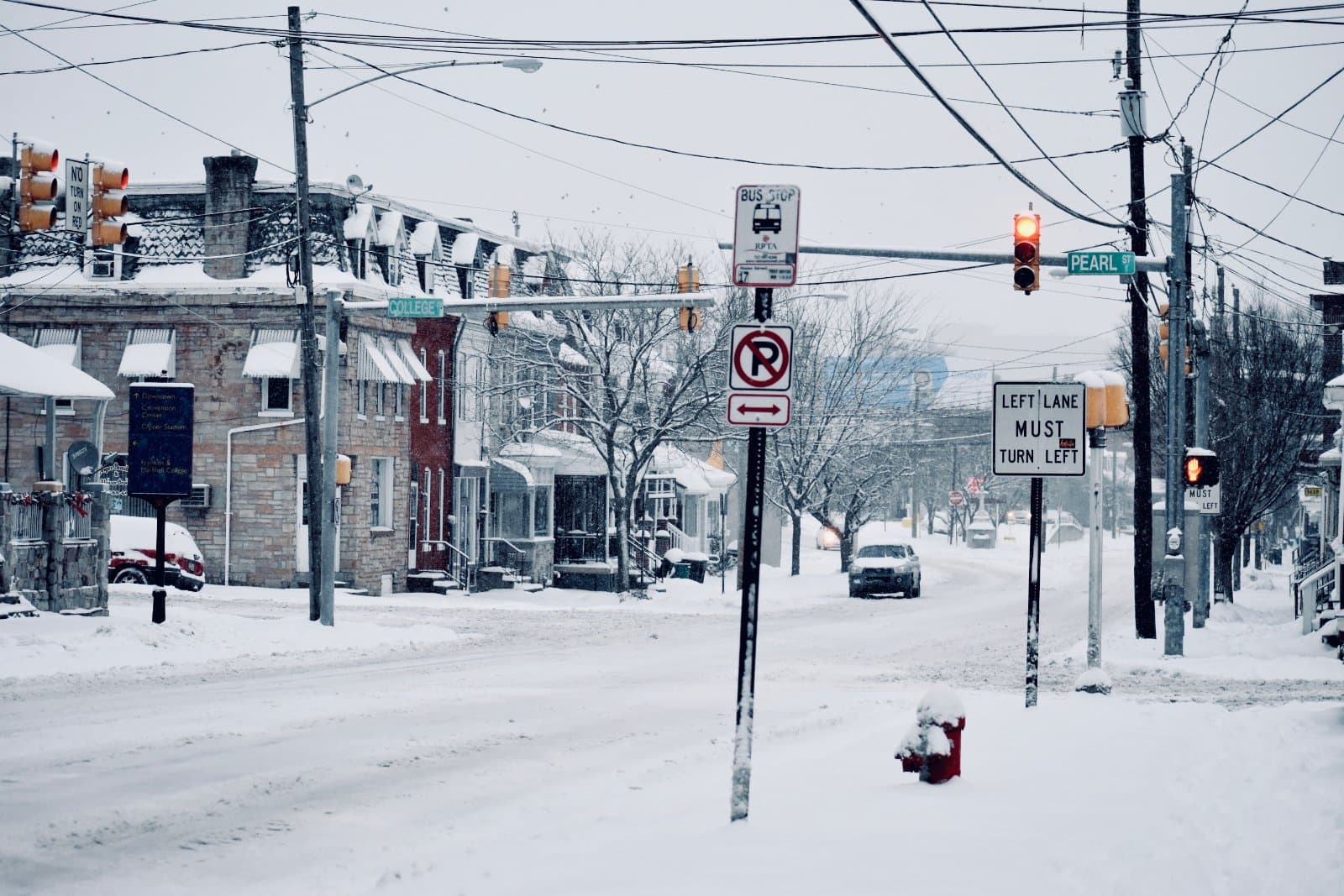
The Pennsylvania maintenance year
A sample from the reviewed task library for this climate zone — your full schedule comes from the generator above.
Fall
Disconnect and drain garden hoses · Yearly · 10 minutes
A connected hose traps water in the spigot pipe, and a hard freeze can crack that pipe inside the wall. Disconnect and drain hoses before the first hard freeze.
Timing in this zone: mid-October
Shut off and drain exterior spigots · Yearly · 15 minutes
Closing the interior shutoff and draining the line removes the freeze risk entirely. It's recommended even if you have frost-free spigots.
Timing in this zone: Late October/November
Winterize the irrigation system · Yearly · 30 minutes to book a blowout, or DIY with a compressor
Water left in buried lines freezes and splits fittings you can't see until spring. Schedule a blowout, or DIY with a compressor, before the first hard freeze.
Timing in this zone: mid-October
All year
Change the furnace filter · Every 3 months · 10 minutes
A clogged filter forces the furnace to work harder and wear out sooner. Check it monthly and replace it when it looks gray and dusty. Hint: buy multiple filters so you have them on hand next month!
Test smoke detectors · Every 6 months · 5 minutes
Smoke detectors only work if the batteries do. It's recommended to test every detector twice a year and replace batteries as needed.
Test carbon monoxide detectors · Every 6 months · 5 minutes
Carbon monoxide is invisible and odorless, so the detector is your only warning. Test it twice a year, especially before heating season.
Winter
Watch for ice dams at the roof edge · After heavy snow + thaw cycles · 5 minutes from the driveway
A thick ridge of ice at the gutter line means snowmelt is backing up under the shingles. After heavy snow, a glance from the driveway tells you if one is forming.
Timing in this zone: after big storms
Let faucets drip during deep freezes · During deep-freeze events · 2 minutes
Moving water is much harder to freeze. On subzero nights, a thin stream from faucets on outside walls is cheap insurance against burst pipes.
Timing in this zone: rare single-digit snaps
Check that the sump discharge line isn't frozen · Monthly in winter, and during thaws · 5 minutes
If the discharge line freezes, the pump pushes against a plug of ice until it burns out or the pit overflows. Check the outlet during cold snaps and thaws.
Spring
Test the sump pump · Yearly (plus after long idle spells) · 15 minutes
Spring melt and heavy rain tend to arrive together, and the pump needs to be ready. Pour a bucket of water into the pit and confirm it kicks on and drains. While you're there, take a look in the pic and remove any debris.
Check sump pump backup battery · Yearly · 10 minutes
The storms that flood basements often knock out power too. Check the backup battery's charge and age each spring.
Timing in this zone: Do this in the late winter, early spring before heavy rains
Clean gutters and downspouts (spring pass) · Twice a year · 1–2 hours
Winter leaves gutters full of grit and seed pods. Clogged gutters send water toward the foundation, so it's worth clearing them each spring. This will help heavy spring rain water drain properly.
Summer
Inspect and reseal the deck · Yearly check; reseal every 2–3 years · 20 minutes to check; a weekend to seal
Sprinkle water on the boards; it should bead up on sealed wood. If it soaks in, the deck is absorbing rain and it's time to reseal. Check your forecast and plan to work on this during a week with no rain.
Wash siding · Yearly · 2 hours
A yearly rinse removes the mildew film before it becomes a scrubbing job. It's also your best chance to spot loose or damaged siding up close.
Trim vegetation back from the house · Yearly · 1 hour
Branches that touch the house give insects a bridge and hold moisture against the siding. Aim for at least a foot of clearance all the way around. Note: Many insurers will require this to issue or renew your homeowners insurance.
Real houses, real people
What homeowners say
“With three kids and two working parents, time for home maintenance can be hard to find. Lillypad's Fix It Friday emails highlight the key tasks that only take a few minutes but make a huge impact. We use the add-to-calendar feature and carve out 30 minutes each weekend to tackle a few small things as a family. The kids love learning about taking care of our home!”
 KyleSaginaw, Michigan
“Even though we're just renting this house, Lillypad helps us stay on top of the must-do tasks so that we can avoid having to call the landlord for the big stuff. The tasks are relatively simple to do, and the advice we get from Lillypad is helpful, educational, and affirming.”
 MikeWashington, DC
“My wife and I are in our 80s and our adult kids helped us set up Lillypad to manage our house. The weekly reminders are very helpful, especially since we're not as sharp as we used to be. Plus, the kids can help us plan projects and they even come over and help sometimes!”
 JerryBay Village, Ohio
Testimonial 1 of 3
Pennsylvania home maintenance questions
How many Pennsylvania homes have high radon, and how often should I retest?
PA DEP estimates about 40% of homes tested in Pennsylvania come back above the EPA action level of 4 pCi/L, one of the highest rates in the country. The cause is largely the Reading Prong, a uranium-bearing formation running under Berks, Lehigh, Northampton, Bucks, Montgomery, and Chester counties. Retest every two years, and after any change to basement airflow or a repair to an existing mitigation system.
When is the first freeze in Pennsylvania?
It depends heavily on where you are. NWS 1991–2020 normals put Pittsburgh's average first freeze at October 20 and Erie's at November 1 — the lake keeps the shoreline milder than the mountains two hours inland. The northern tier and the Alleghenies run weeks earlier than either, and the southeast around Philadelphia runs latest of all.
How often does an oil furnace need service in Pennsylvania?
Once a year, before heating season. The burner needs its filter and nozzle replaced and its combustion chamber cleaned, since soot buildup costs you on every delivery all winter. Check the tank for weeping seams and rust streaks at the same visit — a tank leak is an environmental cleanup that most homeowners policies exclude.
Will knob-and-tube wiring affect my home insurance in Pennsylvania?
It can. Carriers commonly surcharge, restrict, or decline coverage on homes with active knob-and-tube, and it resurfaces at every renewal and every insulation project. With roughly a quarter of Pennsylvania's occupied housing built before 1940, it's a common find here — and it fails badly when someone buries it under blown-in insulation.
When should you check sump pump backup battery in Pennsylvania?
Do this in the late winter, early spring before heavy rains. The storms that flood basements often knock out power too. Check the backup battery's charge and age each spring.
When should you reconnect hoses and open exterior spigots in Pennsylvania?
late April. Opening the outdoor water season deliberately helps you catch winter damage early. Watch each spigot as you reconnect; a cracked pipe often shows up as a leak indoors.
When should you disconnect and drain garden hoses in Pennsylvania?
mid-October. A connected hose traps water in the spigot pipe, and a hard freeze can crack that pipe inside the wall. Disconnect and drain hoses before the first hard freeze.
Keep the whole house on schedule
Lillypad builds your schedule free, no login. The paid plan adds Fix It Friday — one weekly email with what's worth doing this weekend. See pricing, or how we compare to other home maintenance apps.